

―
What Is Multilateralism?
A way to solve problems we cannot solve alone
―
Have you ever seen the film The Martian?
There is a moment when NASA desperately searches for a way to rescue astronaut Mark Watney, who has been left alone on Mars. But when the United States’ resupply launch fails, the possibility of saving him begins to fade.
Then, help comes from an unexpected place.
The China National Space Administration (CNSA) offers to provide its own rocket.
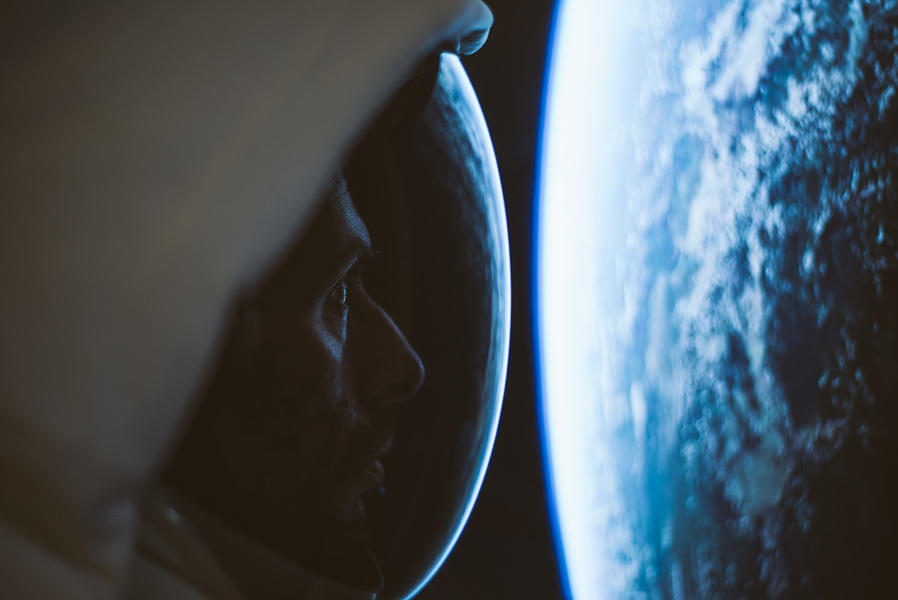
What makes this scene so memorable is not simply the emotion of a successful rescue.
It is the sight of powerful countries that were once competing with each other willingly sharing their technology and resources to save one person.
That moment captures the very essence of multilateralism.
Most of us live within nation-states.
Inside a country, there are police, courts, and systems that can punish people when they break the rules.
But what about relations between countries?
There is no world government.
There is no international police force.
There is, in reality, no authority that can forcibly arrest major powers like the United States or China.
So does that mean the international community is simply a lawless space where powerful countries do whatever they want?
Fortunately, not entirely.
This is where the concept of multilateralism comes in.
Put simply, multilateralism is a way for multiple countries to cooperate based on shared rules and principles.
Unlike unilateralism, which prioritizes only one country’s own interests, multilateralism is closer to an attitude in which different states sit at the same table, create minimum rules together, and try to uphold them.
Multilateralism vs. Unilateralism: What Is the Difference?
Multilateralism
Multiple countries sit at the same table → Create shared rules together →
Agree to uphold them together
Unilateralism
My country’s interests come first →
Other countries’ circumstances come second → Each country survives on its own rather than cooperating
In fact, we already live every day within multilateralism.
We simply may not notice it.
The passport system we use when traveling abroad, international aviation rules, infectious disease quarantine systems, and even internet communication protocols all operate on the foundation of international cooperation.
The same was true during the pandemic, when a single announcement from the World Health Organization (WHO) could prompt the entire world to respond at once.
Problems such as the climate crisis and AI regulation cannot be solved by one country acting alone.
Carbon emitted from a factory in one country ultimately changes the temperature of the entire planet, and AI technology developed in one country can spread across the world in an instant.
That is why the United Nations describes multilateralism not simply as a diplomatic technique, but as a “way of governing and a way of thinking” for surviving together in an interconnected world.
▲ Video in preparationSource: Sunhak Peace Prize Official YouTube Channel
―
Why Was Multilateralism Created?
A “global operating system” built on the ruins of war
―
Multilateralism was not a concept that had always existed.
Rather, it was closer to a lesson humanity barely managed to learn after a devastating failure.
After the Second World War ended, people began asking themselves:
Why did humanity destroy itself to this extent?
If we continue to leave the world in a state where powerful countries can push others around by force, what will happen next?
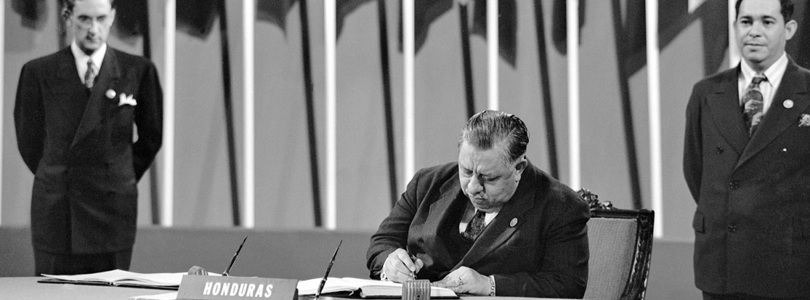 ▲ Source: UN (The United Nations, founded in 1945, was closer to a “global operating system” designed to prevent disasters like world war from ever happening again.)
The answer that emerged from those questions was the United Nations (UN).
It was not simply an international friendship club.
Afterward, international organizations such as the World Health Organization (WHO), the World Trade Organization (WTO), and UNICEF were also created one after another.
In short, multilateralism became a kind of safety mechanism designed to reduce, even if only slightly, a world where powerful countries could do whatever they wanted.
How Does Multilateralism Work?
Treaties, conventions, and international norms
Mediation, negotiation, monitoring, and verification
Climate, infectious diseases, oceans, and refugees
―
Why Is Multilateralism Shaking Now?
The weakening of U.S. leadership, U.S.-China competition over rules, and the logic of power
―
The problem is that this system itself is now beginning to shake.
The world is once again tilting away from “let’s make rules together” and toward “everyone must survive on their own.”
Why is this happening?
Because the three pillars that have held the world together are shaking at the same time.
The first pillar: the United States, which once managed the global order, is shaking.
For a long time, the world operated within an order largely shaped by the United States.
With its strong economy, military power, and the dollar as the world’s key international currency, the United States played the role of a kind of “referee” in the international community.
But what about now?
Political division within the United States is growing more serious, and the country’s massive national debt has also become a major concern.
The country expected to manage the global order has reached a point where it must first worry about its own household.
For other countries, this naturally raises a question:
“Can we continue to trust the United States in the future?”
Second, the United States and China have begun competing over the rules themselves.
In the past, the important question was, “How can we create rules together?”
Now, the world has moved much closer to a struggle over “who gets to set those rules?”
Semiconductors, AI, supply chains, finance, the military, diplomacy...
Almost every field has become a stage for this competition.
To put it in simpler terms, it is like a classroom suddenly having two class presidents. At first, everyone followed the same rules. But now, the two class presidents have begun insisting on different rules. When that happens, the students naturally start taking sides. Instead of shared rules, the question of “whose side are you on?” becomes more important.
And that is exactly what the international community looks like right now.
And perhaps the most dangerous change lies somewhere else.
A world in which power takes priority over international norms is beginning to reappear.
A representative example is Russia’s invasion of Ukraine.
International law clearly prohibits wars of aggression. But in reality, military force moved before the rules did.
“International norms will protect us.”
his assumption, which the international community had quietly relied on, has been deeply shaken.
What about the economic sphere?
In the past, the financial system was seen as a relatively neutral space. But recently, finance itself has become a weapon of international politics.
Blocking access to dollar payment networks, freezing overseas assets, and restricting exports of advanced technologies are all examples of such measures.
The limits of international organizations are also becoming increasingly visible.
The United Nations Security Council often fails to act effectively when major international conflicts arise, blocked by the interests of powerful states.
Meetings and declarations continue, but the power to turn them into real action is growing weaker.
The world today is moving closer to a state where the rules still exist, but faith in those rules is disappearing.
And when this system begins to shake, the first to be put at risk are always those with the least power.
According to the World Economic Forum’s Global Risks Report 2026, there are currently 61 conflicts taking place across 36 countries the highest number since the end of the Cold War.
The global conflict risk indicator has also reached its worst level since the Second World War.
This is why the crisis of multilateralism is also a crisis for the future of peace.
―
So What Is the Alternative?
The message of Davos 2026 — “Dialogue is a strategic capability”
―
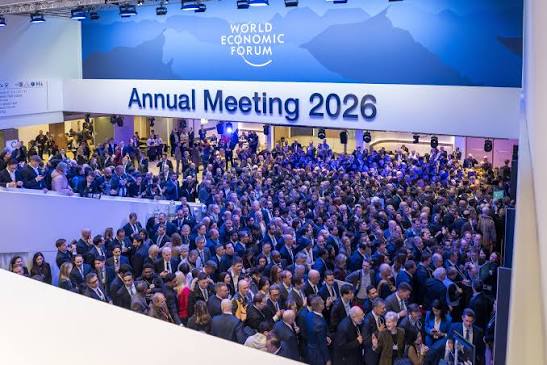
▲ The 2026 World Economic Forum placed “A Spirit of Dialogue” at the center of its agenda.
If multilateralism is shaking this much, what should we do?
Is the international community inevitably moving toward a world where every country simply has to survive on its own?
Fortunately, not necessarily.
Multilateralism may be under strain, but the international community has not completely given up on cooperation.
In fact, recent movements suggest an effort to restore multilateralism in a more realistic form.
One symbolic example was the World Economic Forum 2026.
Its central theme was striking:
“A Spirit of Dialogue.”
The World Economic Forum declared that, in a divided world, dialogue itself has now become a strategic capability.
In the past, dialogue may have been seen as diplomatic courtesy or idealism.
Now, it has become a skill for survival.
That is because the problems the world faces today are simply too large.
Pandemics, the climate crisis, AI, cybersecurity, and supply chain disruptions — none of these can be solved by one country alone.
In the end, even countries that compete with one another have no choice but to maintain at least a minimum level of cooperation.
That is why Ursula von der Leyen, President of the European Commission, said the following in her special address at Davos:
“We need dialogue with our adversaries.”
— Ursula von der Leyen, President of the European Commission
It is a very realistic statement.
It does not mean that only countries that like each other should sit down and talk.
Rather, it means that dialogue must not be cut off even with those we are in conflict with.
Of course, today’s international organizations are not perfect.
They are often criticized for being slow, inefficient, and centered around powerful countries.
That is why, in recent years, the concept of minilateralism has also emerged.
Since it is difficult for all countries to reach agreement at once, this approach suggests that a smaller group of like-minded countries should join hands first.
Where Are “Islands of Cooperation” Being Built?
For example, in areas such as AI regulation, semiconductor supply chains, climate technology, and pandemic response, like-minded countries can begin building cooperation networks first.
Experts call these “Islands of Cooperation.”
It means that even as the wider world becomes more fragmented, the forms of cooperation that are absolutely necessary are still being connected like small islands.
When you think about it, this is also a very human attitude.
Even if countries do not fully like one another, and even if they are politically opposed, they can at least acknowledge one fact:
they are still in the same boat.
―
In the End, Multilateralism Is a “Habit of Dialogue”
A minimum survival skill created by imperfect human beings
―
When you think about it, multilateralism may be less of a grand diplomatic technique and more of a deeply human attitude.
It means not cutting off dialogue even when we do not like the other side.
It means trying to uphold at least the most basic agreements, even when the rules are far from perfect.
And in the end, it means acknowledging that no one can survive completely alone.
That is all it is.
Not perfect idealism,
but a minimum skill created by imperfect human beings
so that we do not completely destroy one another.
As long as we do not entirely give up the effort to persuade one another, even in an age of deep mistrust, the world may still have a chance to row in the same direction.
Written by Sharon Choi
Director of Planning
Sunhak Peace Prize Secretariat
References & Sources
1. United Nations, What is Multilateralism?
2. United Nations Charter, Founding Principles of the United Nations
3. World Trade Organization (WTO), Dispute Settlement System
4. World Economic Forum, Annual Meeting 2026: A Spirit of Dialogue
5. World Economic Forum, Global Risks Report 2026
6. Ray Dalio, Principles for Dealing with the Changing World Order — Published on the author’s official website, economicprinciples.org